It looked so much better in pictures,
I thought with disappointment. Whoever put this apartment together had very little sense of style. What was supposed to be an elegant Austro-Hungarian villa turned out to be a patchy set of different apartments renovated at times when the owners felt like spending some extra money on what they considered beautiful enough. The bathroom tile and pretentious shower might have looked impressive back in the 1990s, when capitalism reached this part of the world. Interior finishes like that were popping up in a lot of places in my own country. Now they looked out of place and not even very convenient to use. Then there was the common overgrown garden with its chaotic flower beds, patchy grass, and mismatched furniture. Our set of sofas was covered with towels — the habit of modest families who preserve everything at all costs.
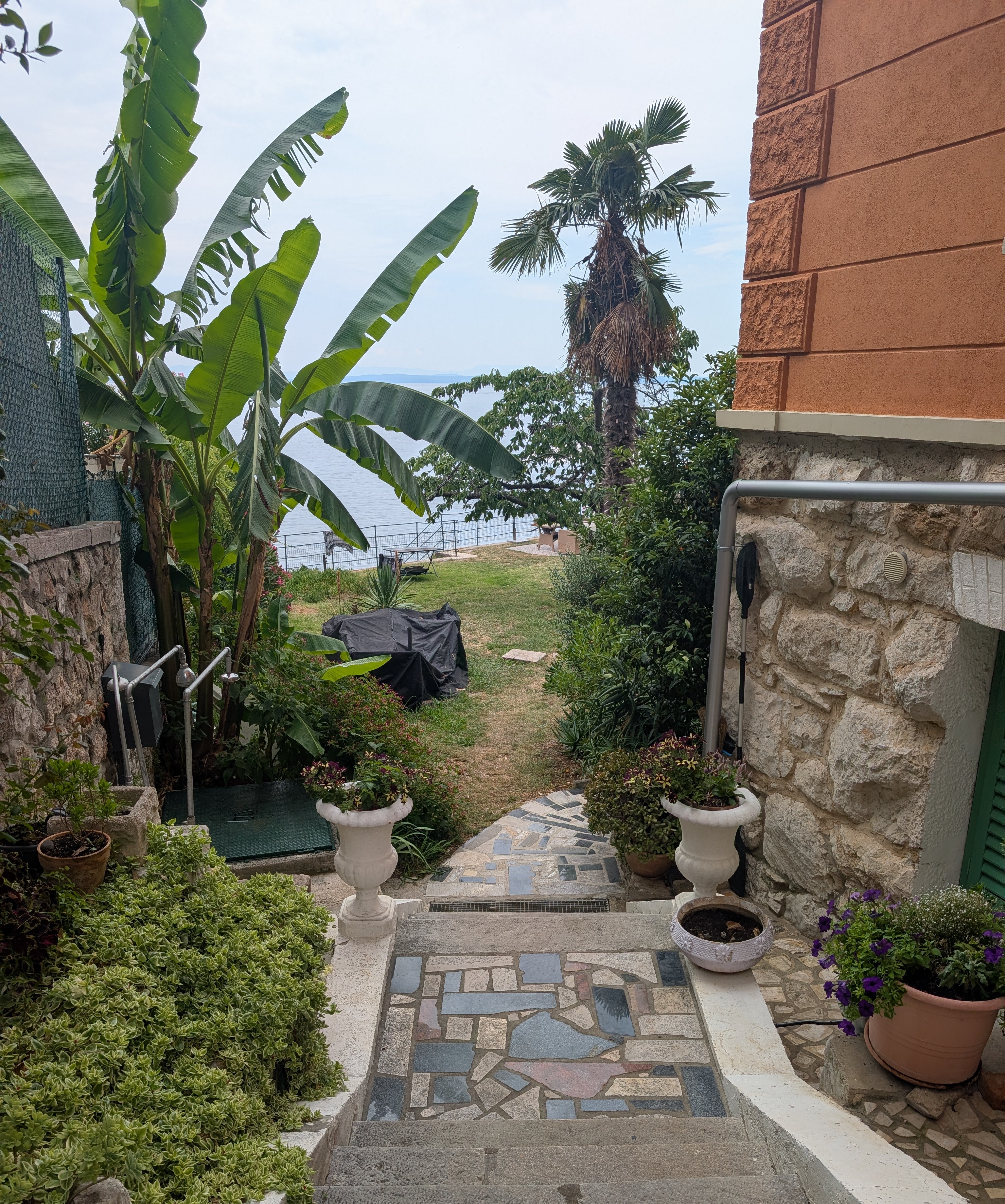
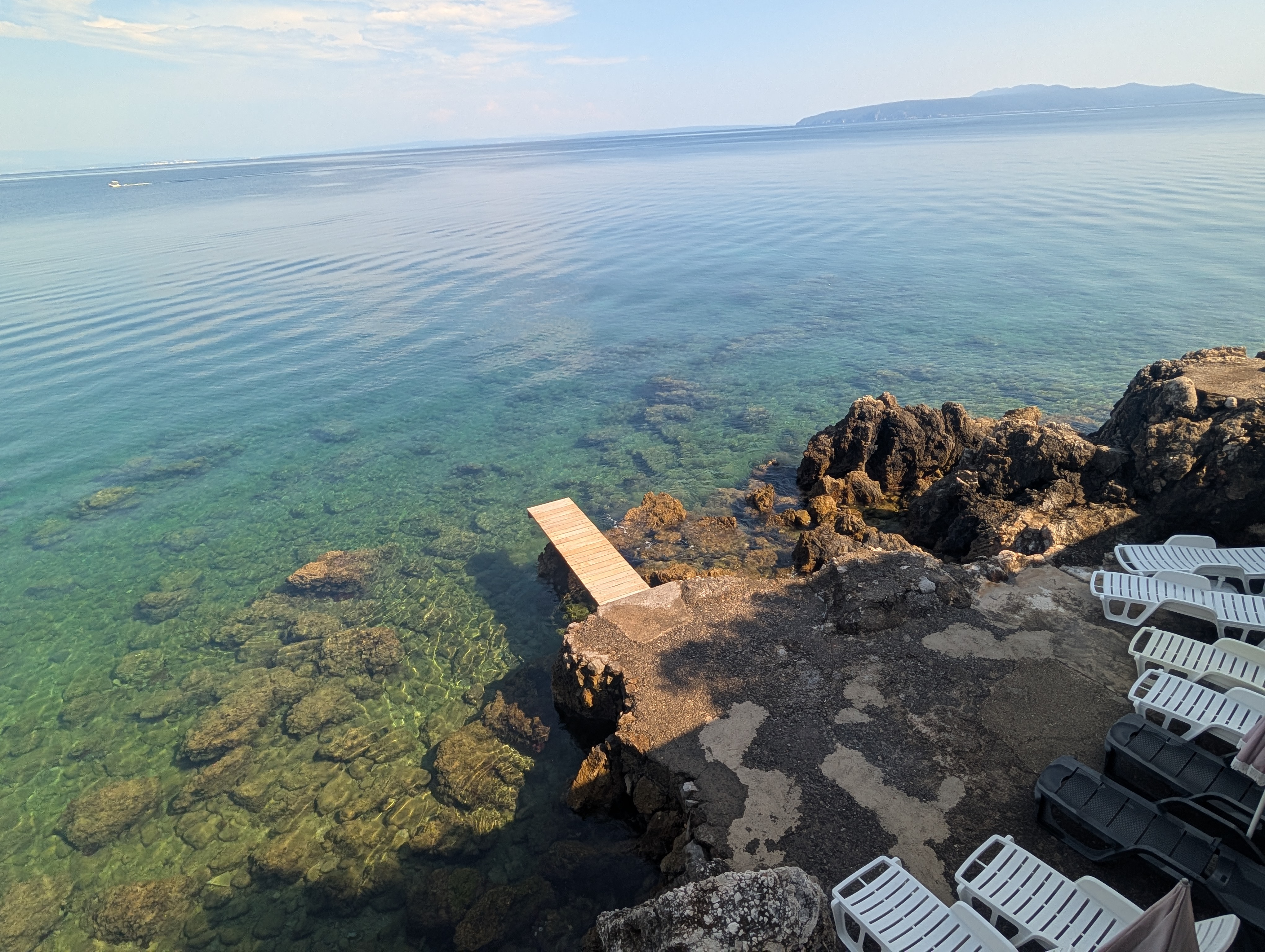
The place felt like arriving at your grandparents’ dacha: a low-key summer residence common in former Soviet states. Our hostess was very much like a grandma herself — kind and hospitable, with a sharp eye for her property, as if it were her most valuable possession. The only thing that matched the pictures was the direct access to the water from a historic stone retaining wall supporting our terrace, and the magnificent views of the Adriatic with that particular blue transparency of the air that can only be found along this shore.
The Lungomare itself was nothing special. In places it passed by local hotels that felt foreign here. Some even carried the atmosphere of old Soviet sanatoriums, famous for their neglect from being “owned by everyone and no one at the same time.” The Grand Budapest Hotel came to mind, along with the quiet fear of ending up on some kind of run-down riviera.
How did I even get here? It was the final leg of a journey around Austria and Slovenia dedicated to family heritage sites, after which my crew wanted to spend some time by the sea. Google Maps instantly offered a beautiful name — Lovran — and after one click I fell in love with the pictures of it: Italianate classic villas surrounded by spikes of cypress trees, nested in layers of dark green cliffs and reflected in emerald-blue water held by old stone walls. That became the picture of my dream summer — or not even summer, but a vacation by the sea in some romantic place layered with beauty, culture, and, presumably, rich history. At least that is what it looked like in pictures.
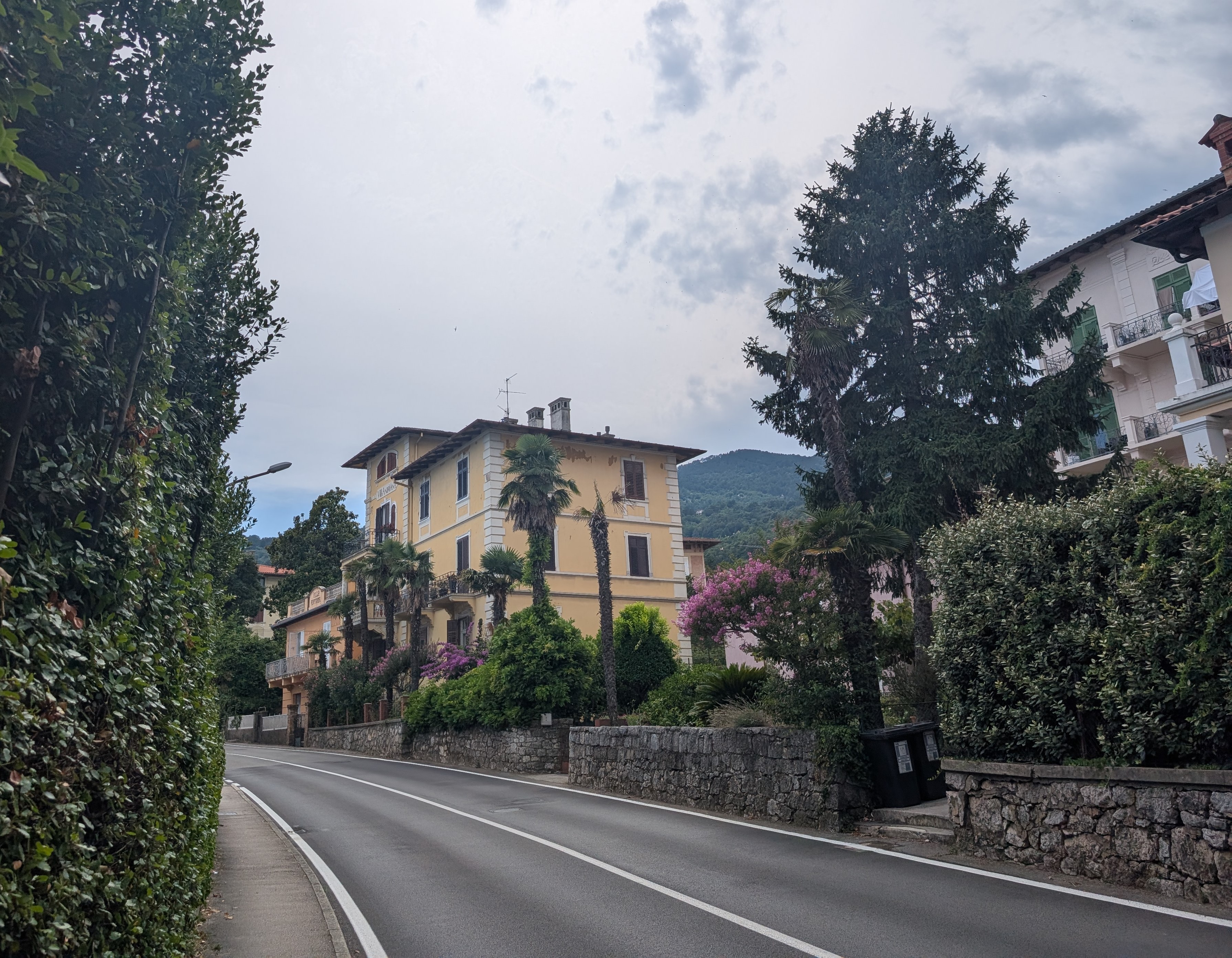
How was it in reality? Just as I described at the beginning. But at some point things started turning around as I discovered more layers of Lovran.
Maybe it was the first dinner at the harbor. I looked at the small fishing boats and asked myself: Would I rather see expensive yachts here? Or do I appreciate that this town still belongs to its people and has not been swallowed by the giants of the tourist industry? Or had I simply expected Lake Como or the Italian Riviera with a better price tag?
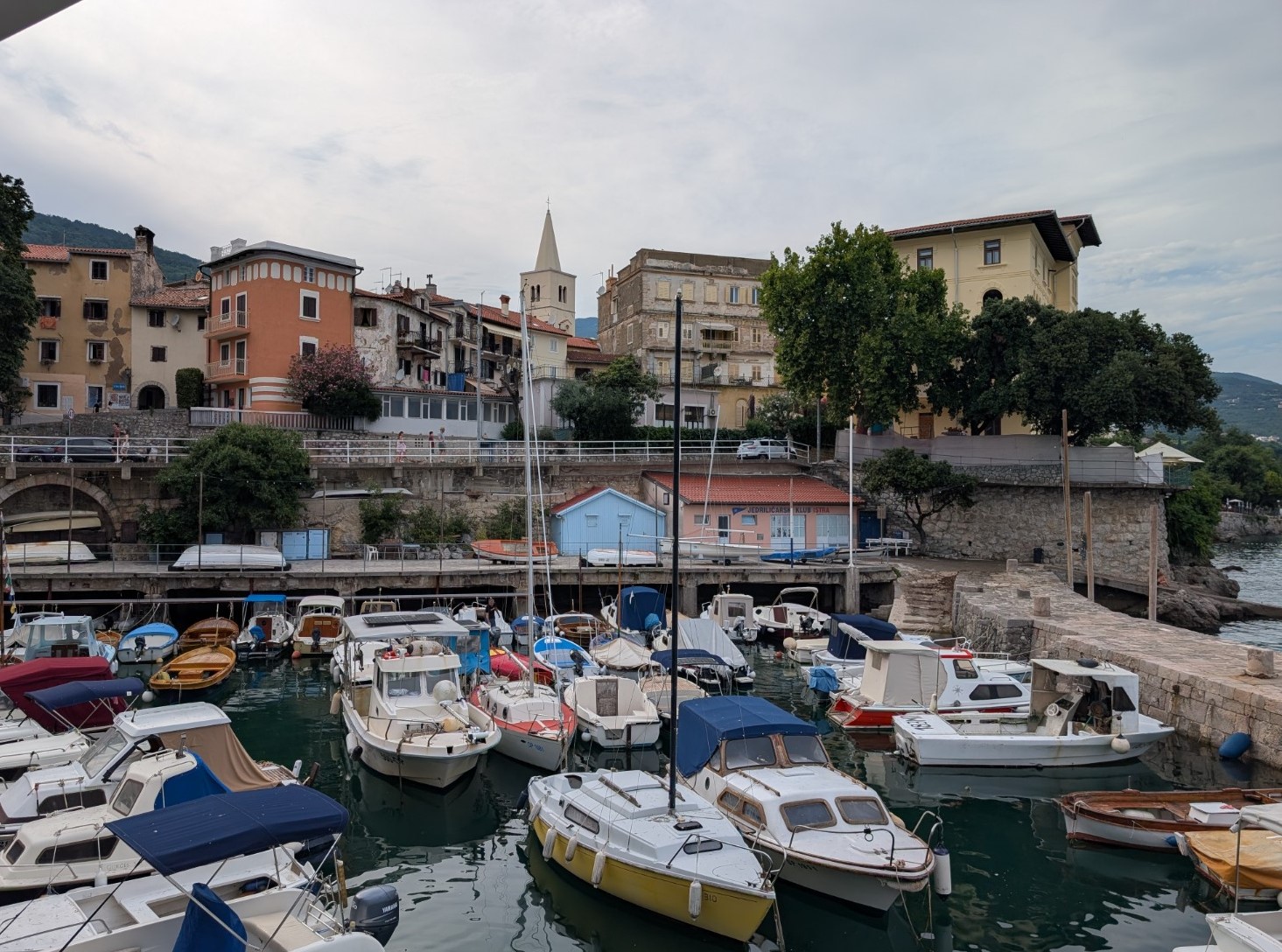
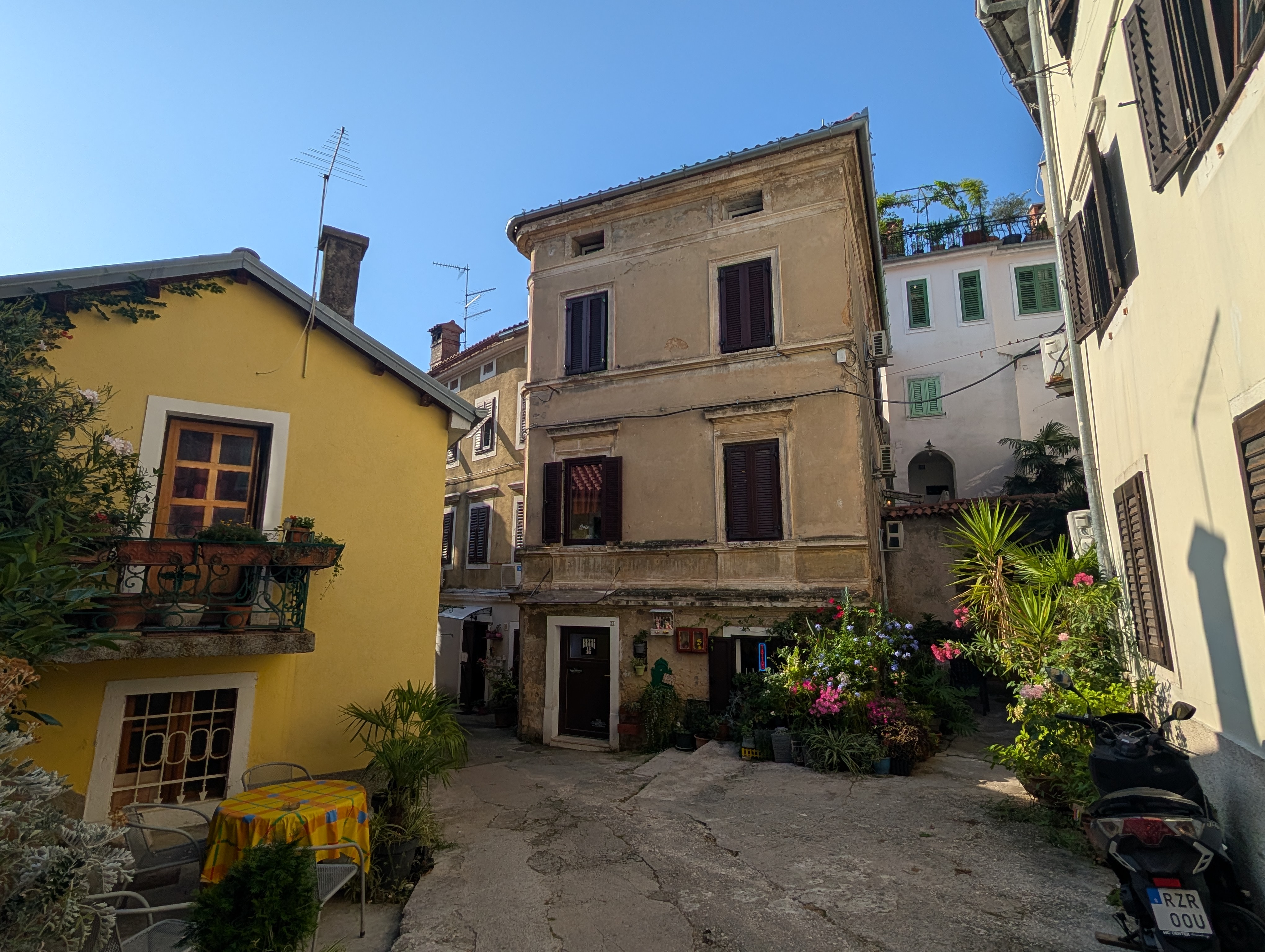
With everything I saw around me, I could tell the place had known better days, but it had not lost its soul. As soon as I thought that, the Old Town proved it. Just like everywhere, every winding street can open a small secret: a flower pot, a colorful door portal, a cat looking for fish tails. But this place was not overcrowded by tourists, souvenir shops, or expensive restaurants. Even in its inconvenient old stone shape, it felt deeply lived in. Cracked concrete, bright shutters, drying towels, a palm tree tucked into a corner — all of it held me like a magnet with its intimate Mediterranean feel.
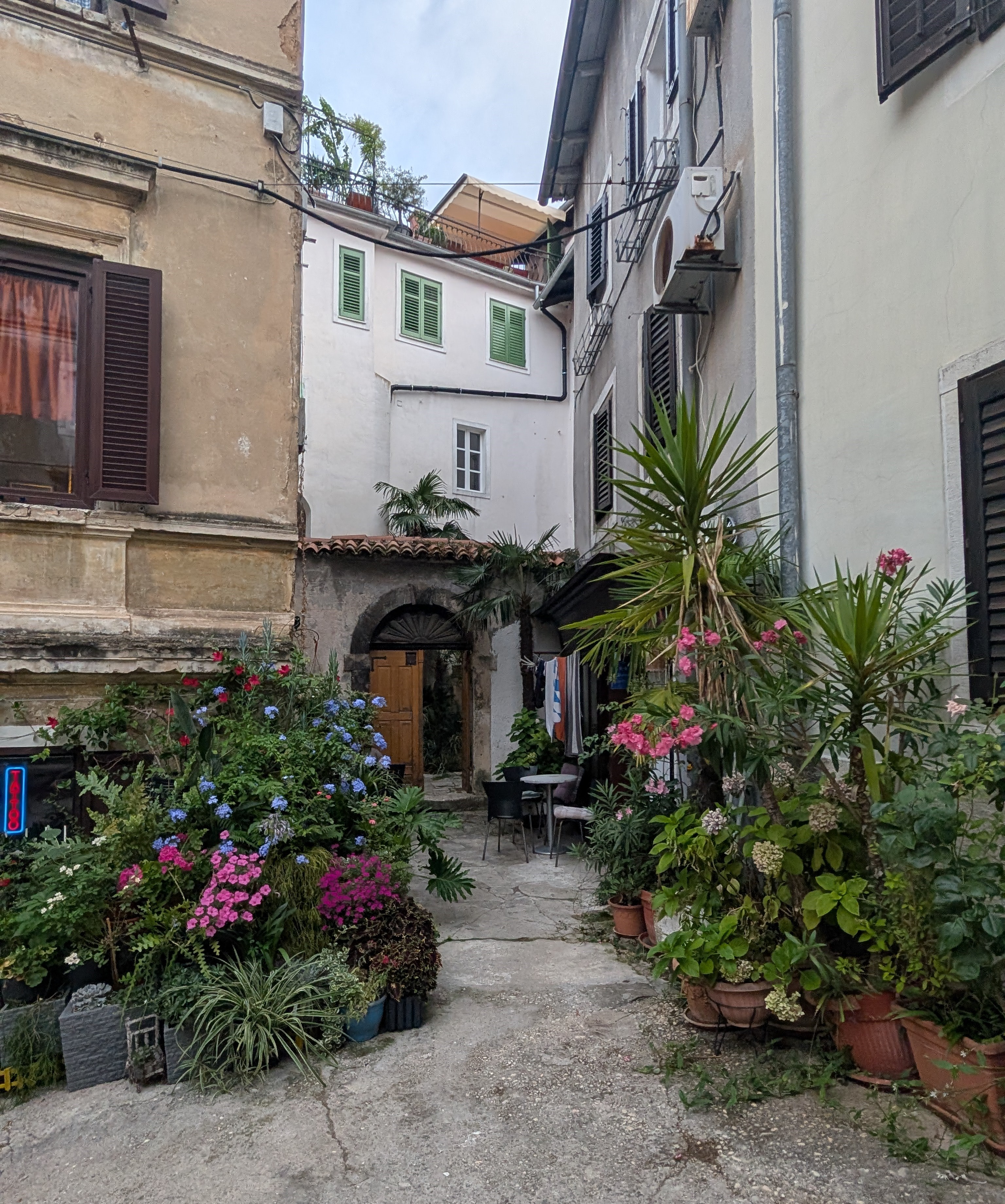
You would not find this in expensive resorts, and I made my peace with it. It does not have to be a resort at all. Let it be a dacha where grandchildren come to visit their grandparents every summer for many generations. That dacha summer culture is something I missed most from my old country: those slow summer evenings with no need to dress up for an expensive restaurant, just a relaxing walk to the beach or a simple dinner on the patio.
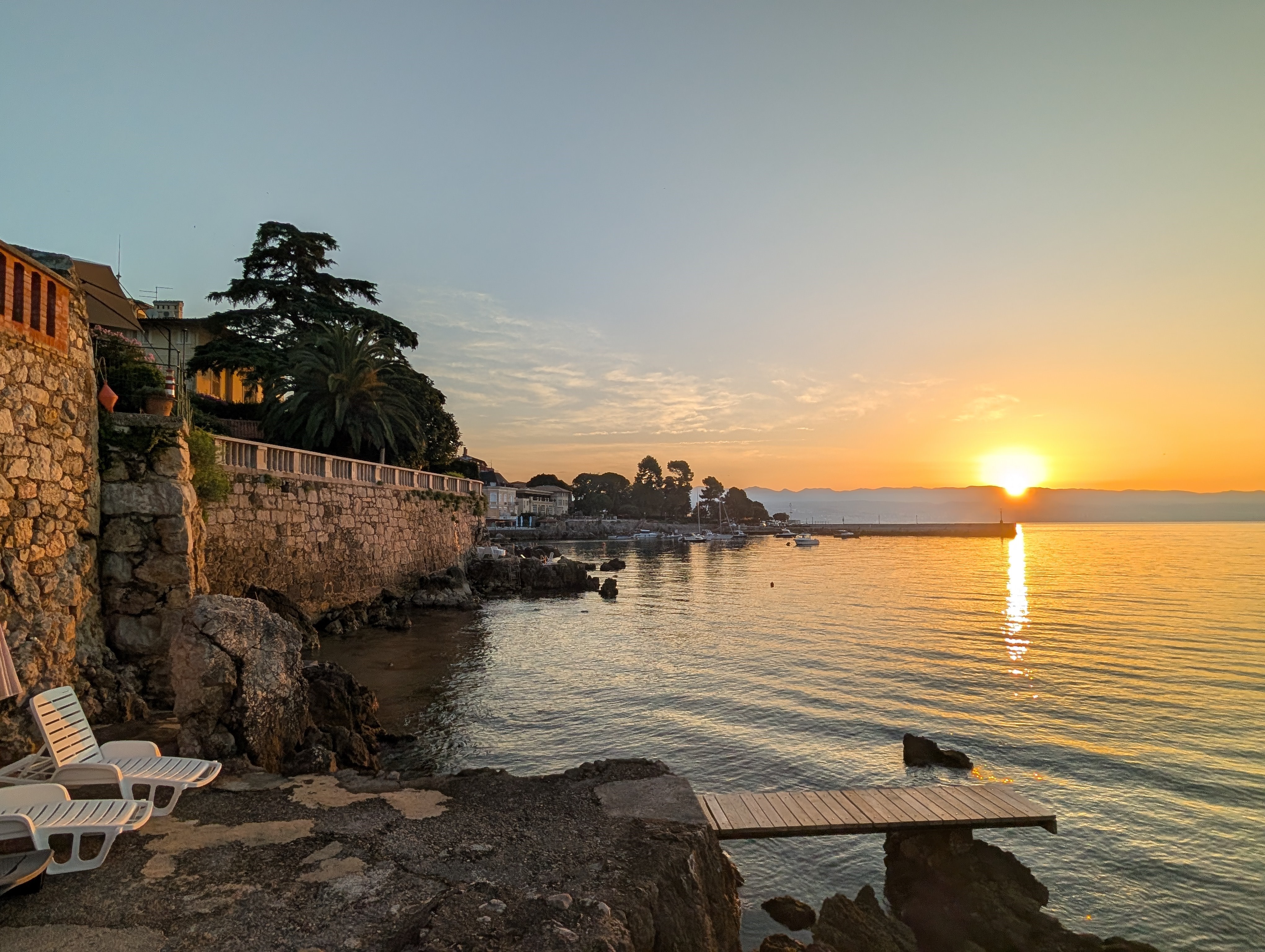
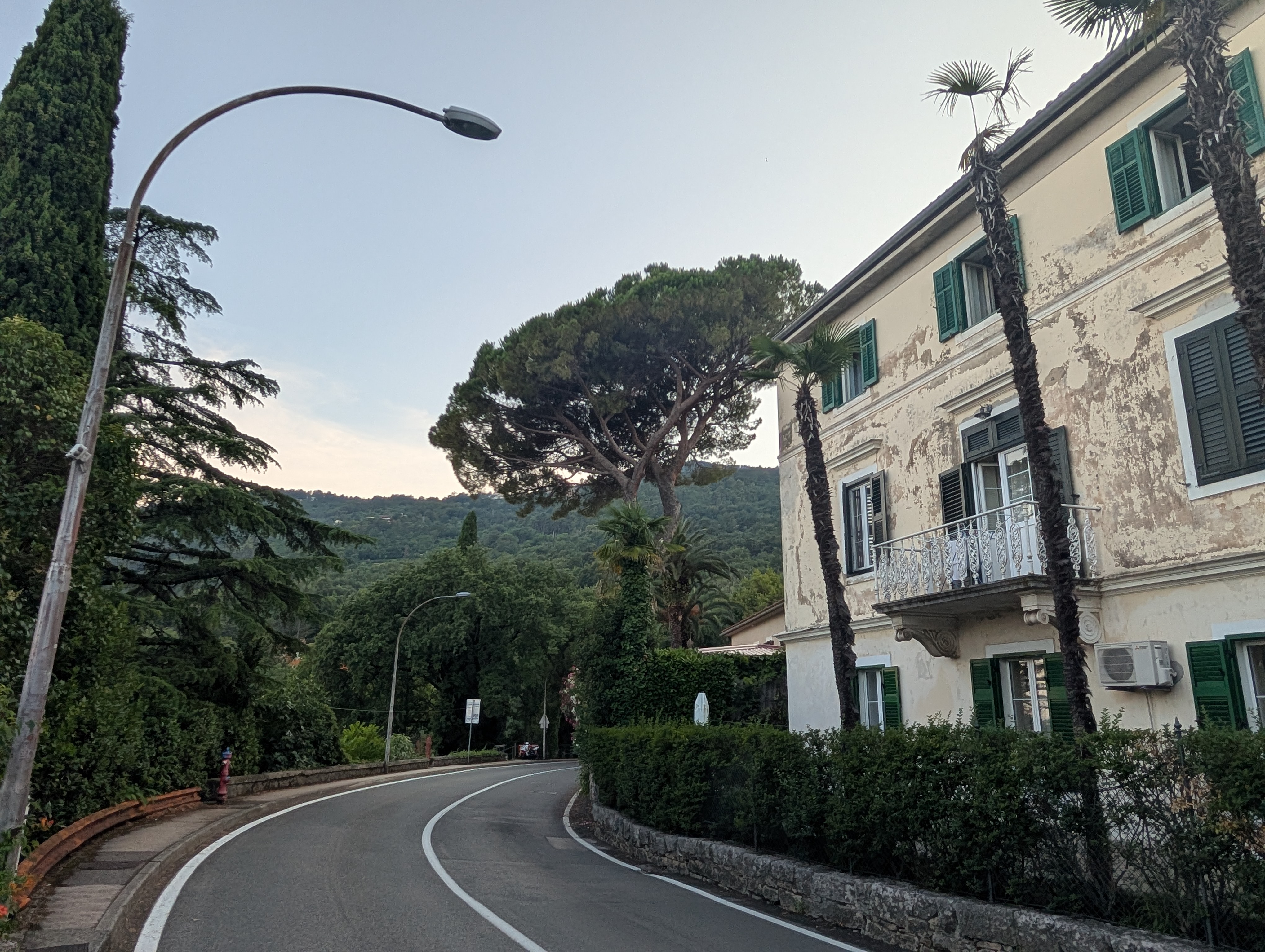
Speaking of walks to the beach — Perahovo was only five minutes away. Getting there along the old weathered villas under the giant umbrellas of the pine trees sealed the deal with Lovran for me. I began to suspect it might be one of the best-kept secrets of the Adriatic. Those were my thoughts as I swam in the calm water at Perahovo beach, looking at the cliffs with their villas, pine trees, and stone-arched retaining walls along the shore. Everything was even better because it held something the photos could never capture.
The next morning brought the realization that the parking situation was terrible and that moving our car would mean losing the spot. It turned into a perfect excuse to finally slow down, walk around, and enjoy the town as it was. Have a morning swim off your deck. Walk into the market and see what the locals buy. Get some bread, some vegetables, a local fish. Drink a coffee on a terrace, say hello to the old town through the stone arch gates, spend a morning on the beach, nap in the afternoon, read a book, eat gelato. Stumble upon a local gentleman who wonders if it was you who took a picture of his cat in the Old Town.
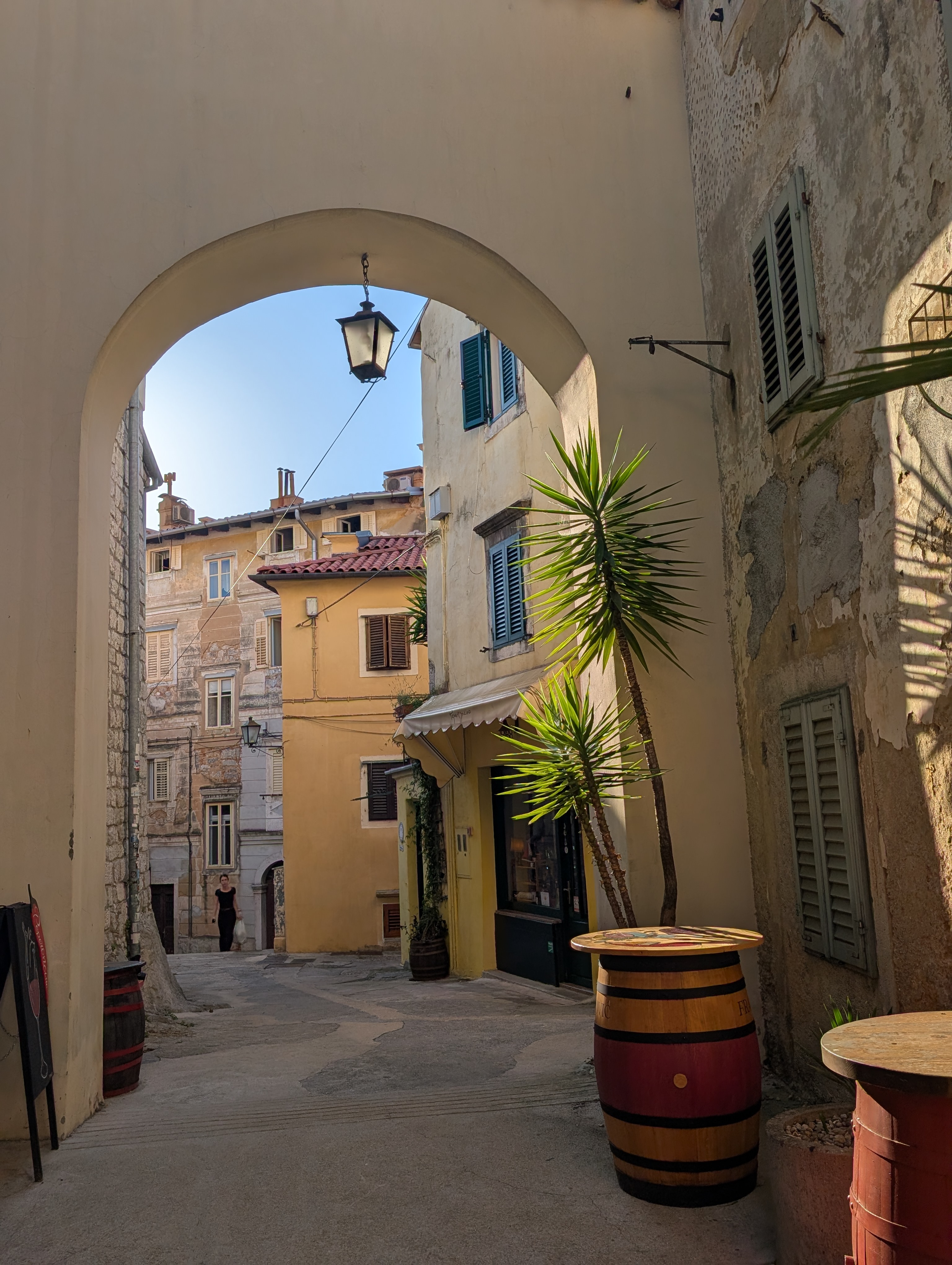
This is how the town becomes a place to live, not just to visit. I could imagine myself living there — becoming one of the grandmas waiting for the grandchildren in summer, cooking fish and tending a little garden next to the sea. This is how Lovran drew us into its rhythm. No iconic sites to check off, no international crowds of tourists, not a resort — more like a neighborhood by the sea where you can truly relax. Just as Lovran is not trying too hard to impress you, you do not need to try to impress anyone either. Enjoy your Adriatic vacation in one of its secret romantic places. Wander among the villas and wonder what kind of life they held in their glory days. Imagine them whispering old melancholic legends. One of them is actually called “Sea Whisper.” It is easy to invent untold secrets and haunted stories behind those flaking stucco walls. What else is needed for a quiet summer? Maybe more boat rides and some spectacular beaches. Easy — just walk to the booth in town and schedule something for the next day.
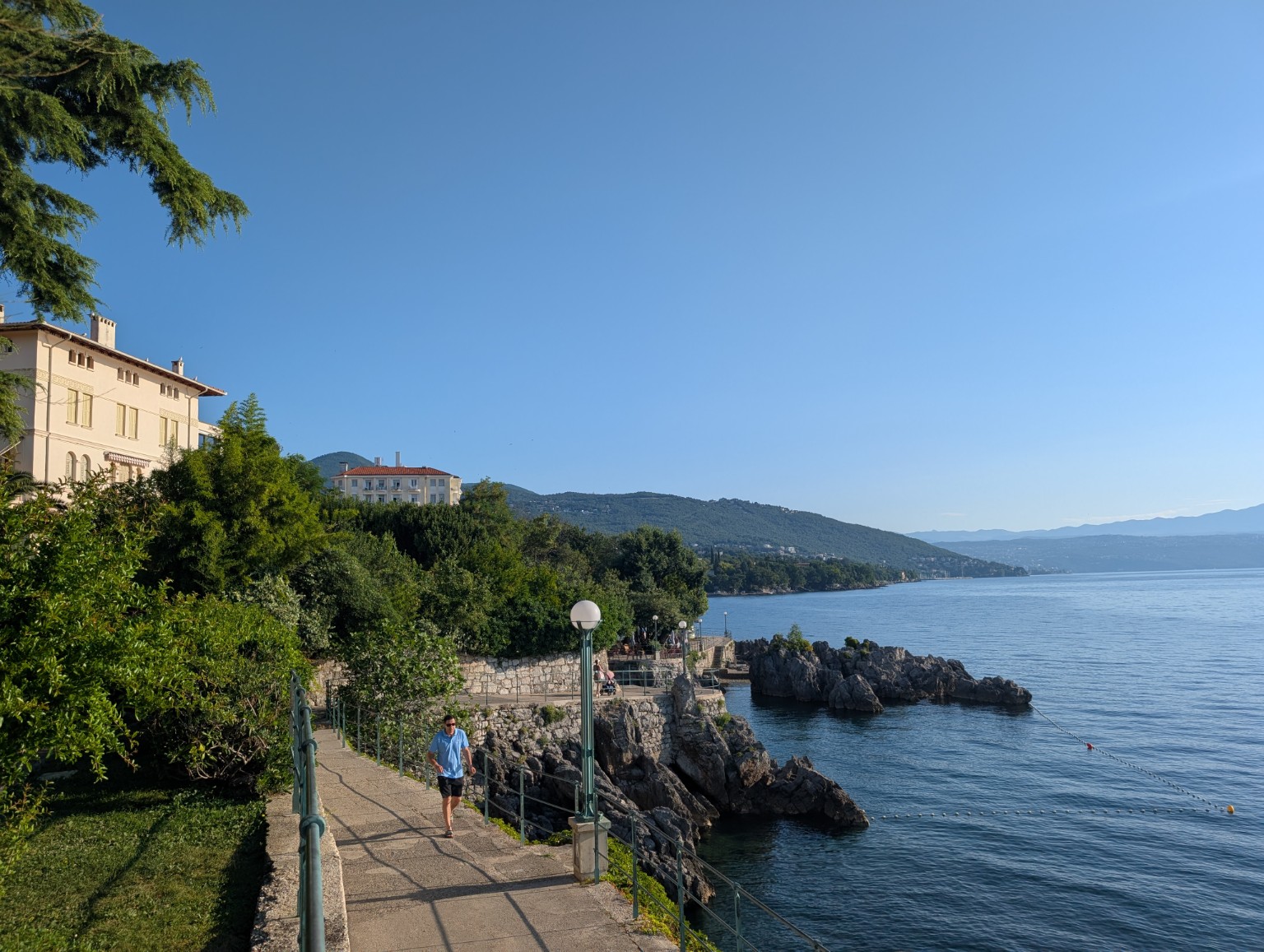
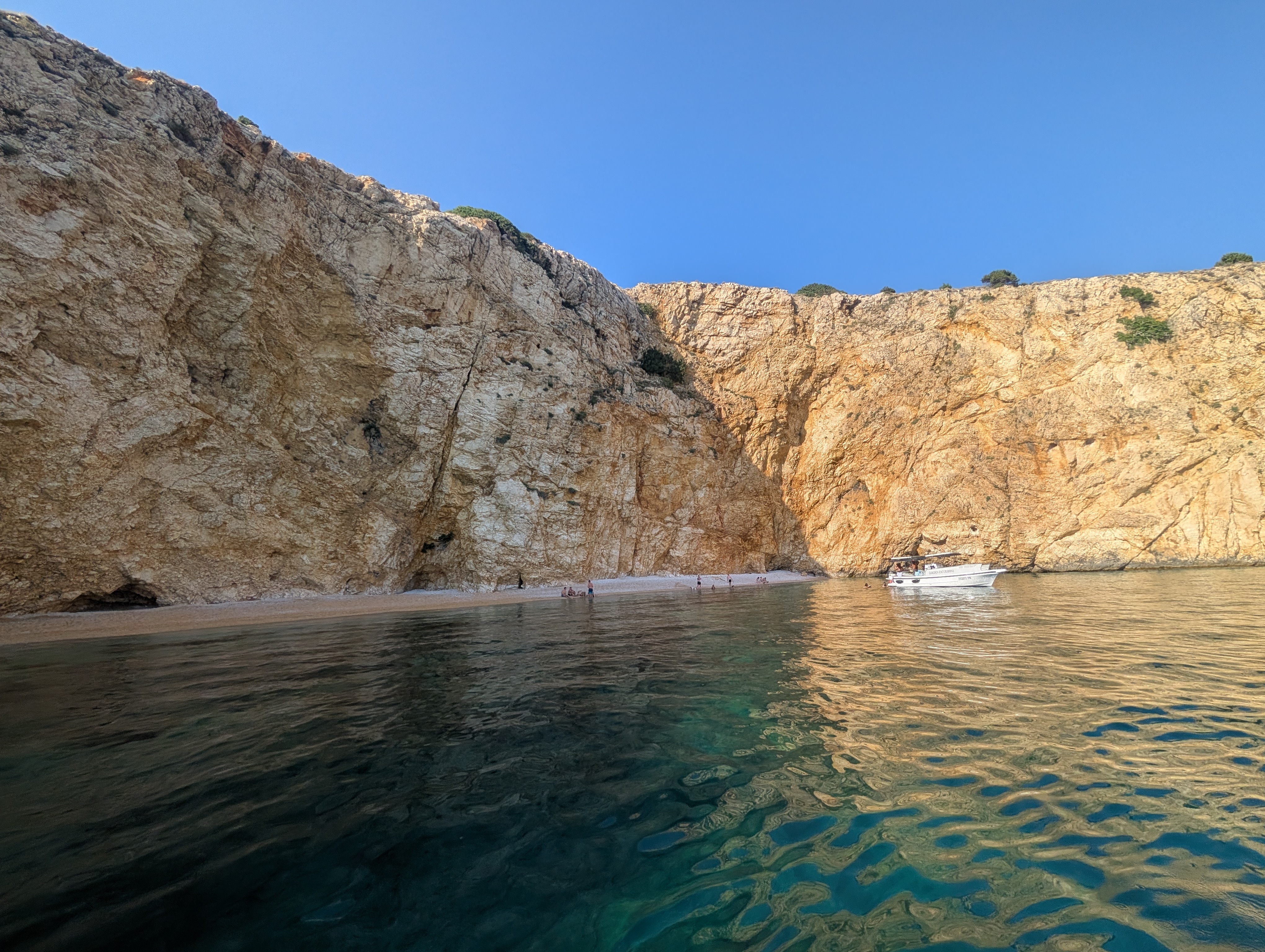
In general, Lovran makes an excellent base for exploring Kvarner Bay and western Istria, provided the parking situation allows it. The day-trip options were tempting. For one of them we chose Punat and the Wild Bays tour. Punat was sleepy and even more relaxing than Lovran. No historic villas, mostly one-story houses, a lazy island feel. A half-drunk skipper delivered us to the most beautiful beaches in the golden hour.
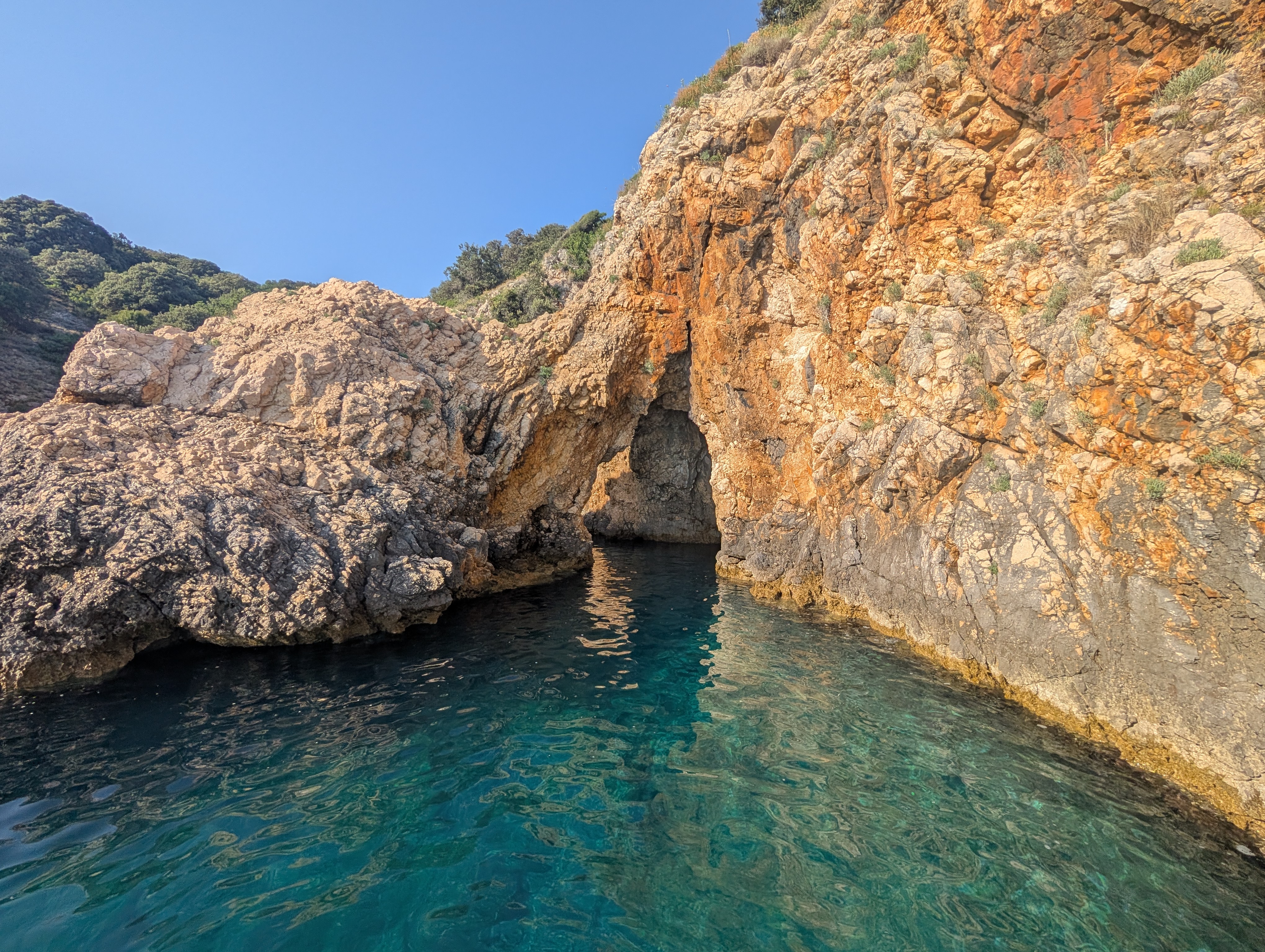
The scenery was superb. At Golden Bay, I wanted to sink into the myriad of tiny yellow pebbles and watch the sun gild the cliffs and the calm evening-blue water. Returning to the harbor in the last rays of sunlight made me fall in love with evening boat rides. That’s how Punat became another knot in the thread that now tied me to Kvarner Bay.
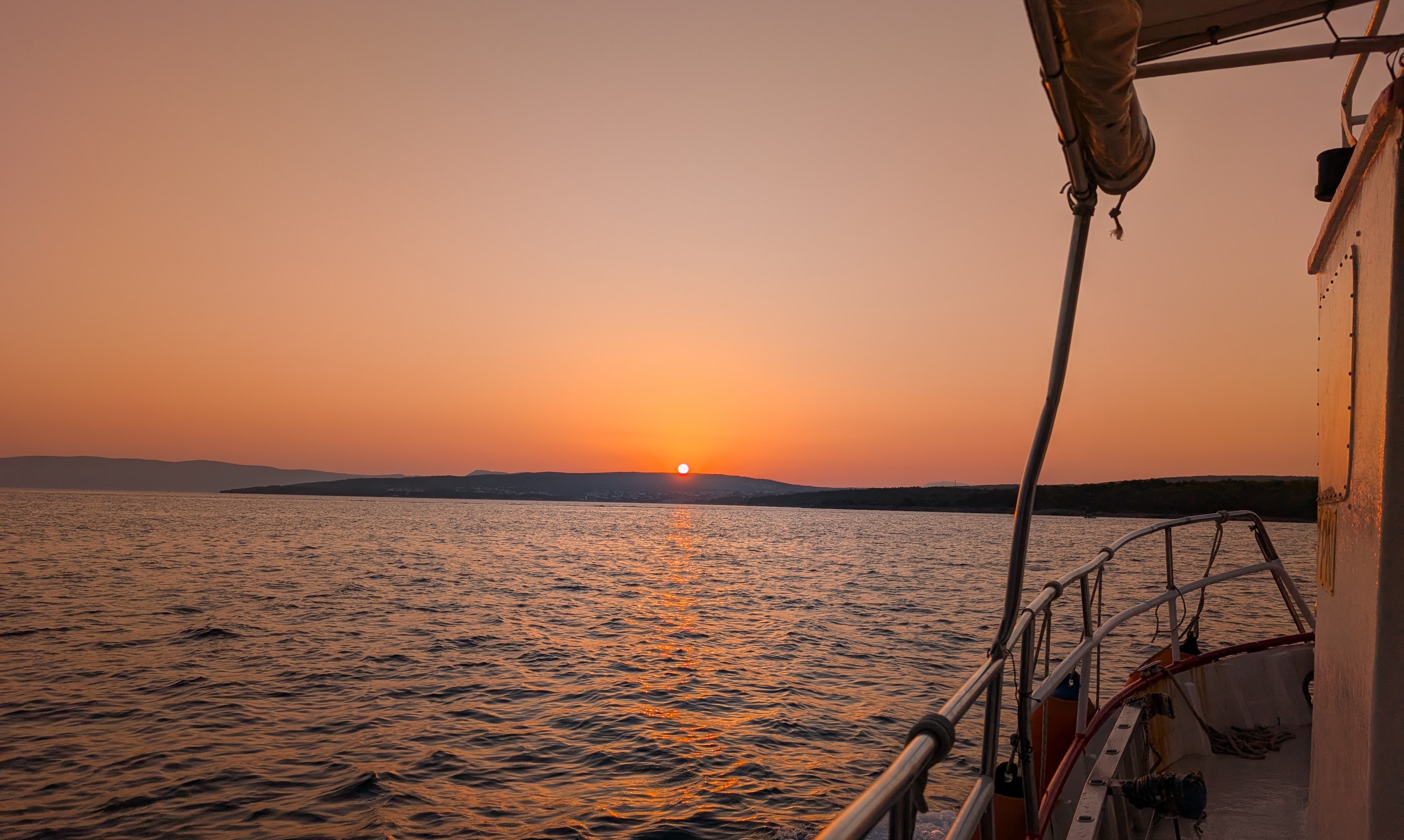
Saying goodbye to Lovran was hard. I spent a long time researching accommodations for future visits, dreaming of buying the abandoned villa across the street and restoring it to its former glory, imagining what it would feel like to be one of the locals. Those villas among the pine trees will stay with me for a long time.
On the way home, curiosity took us to Rovinj. A little more than an hour’s drive from Lovran, it can be done as a half-day trip if parking allows. The road crosses the whole Istrian peninsula — mountains, cliffs, and small towns. As you approach Rovinj you are greeted by a massive alley of pine trees. They look so imposing that you suddenly begin to expect something wonderful at the end.
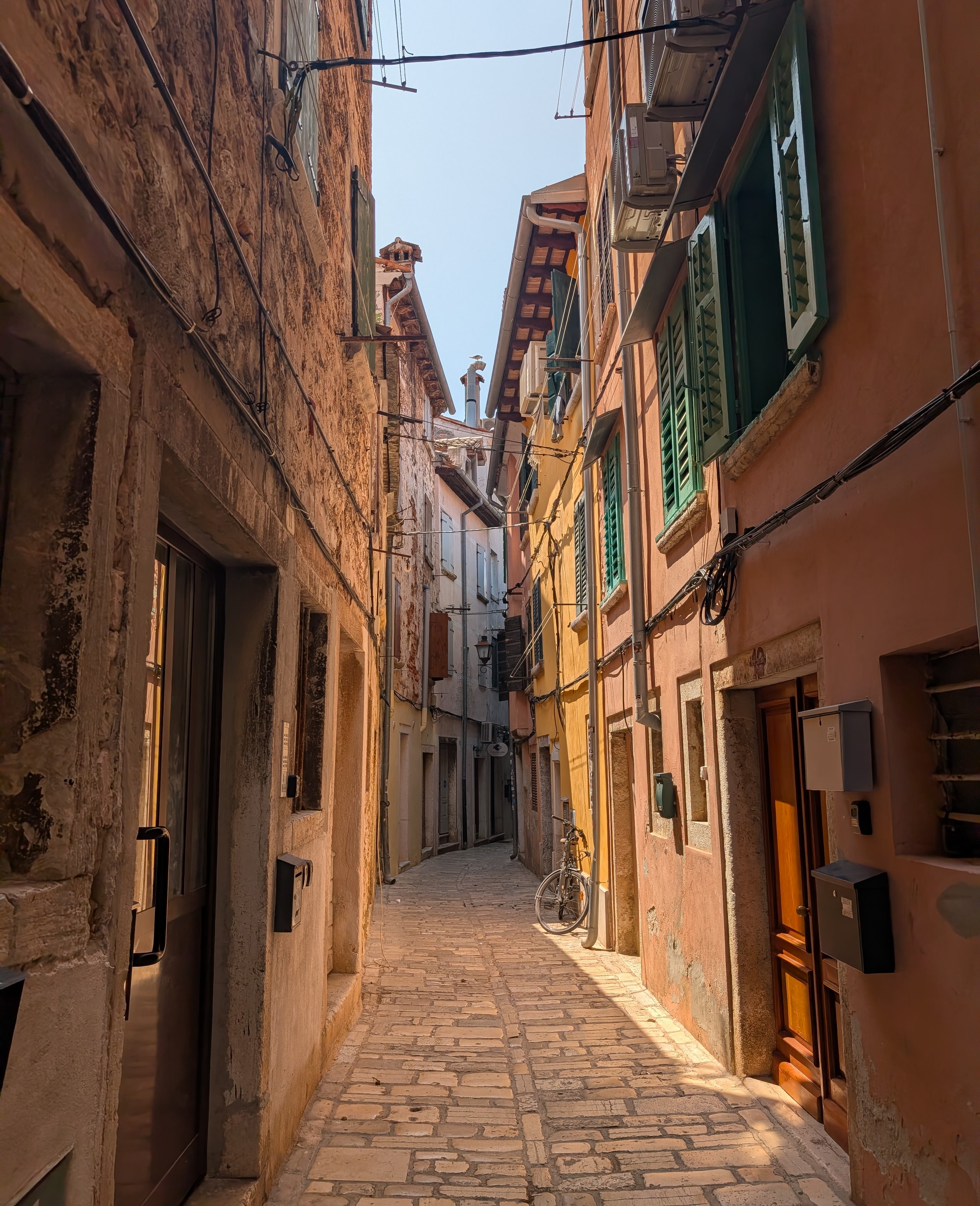
And it arrives the moment you reach the harbor. Rovinj spares no effort to impress you — and not only you. Tourist crowds are visible from the start. Almost everyone is heading in the same direction. You see the famous hill with the bell tower, endless souvenir shops, and boat-tour kiosks. Not Lovran energy at all. Everyone has come to see something great, to have fun, to tick the destination off the list. The crowds are younger, the souvenir shops more numerous, the restaurants more crowded. It is still Mediterranean summer, but louder, brighter, and livelier.
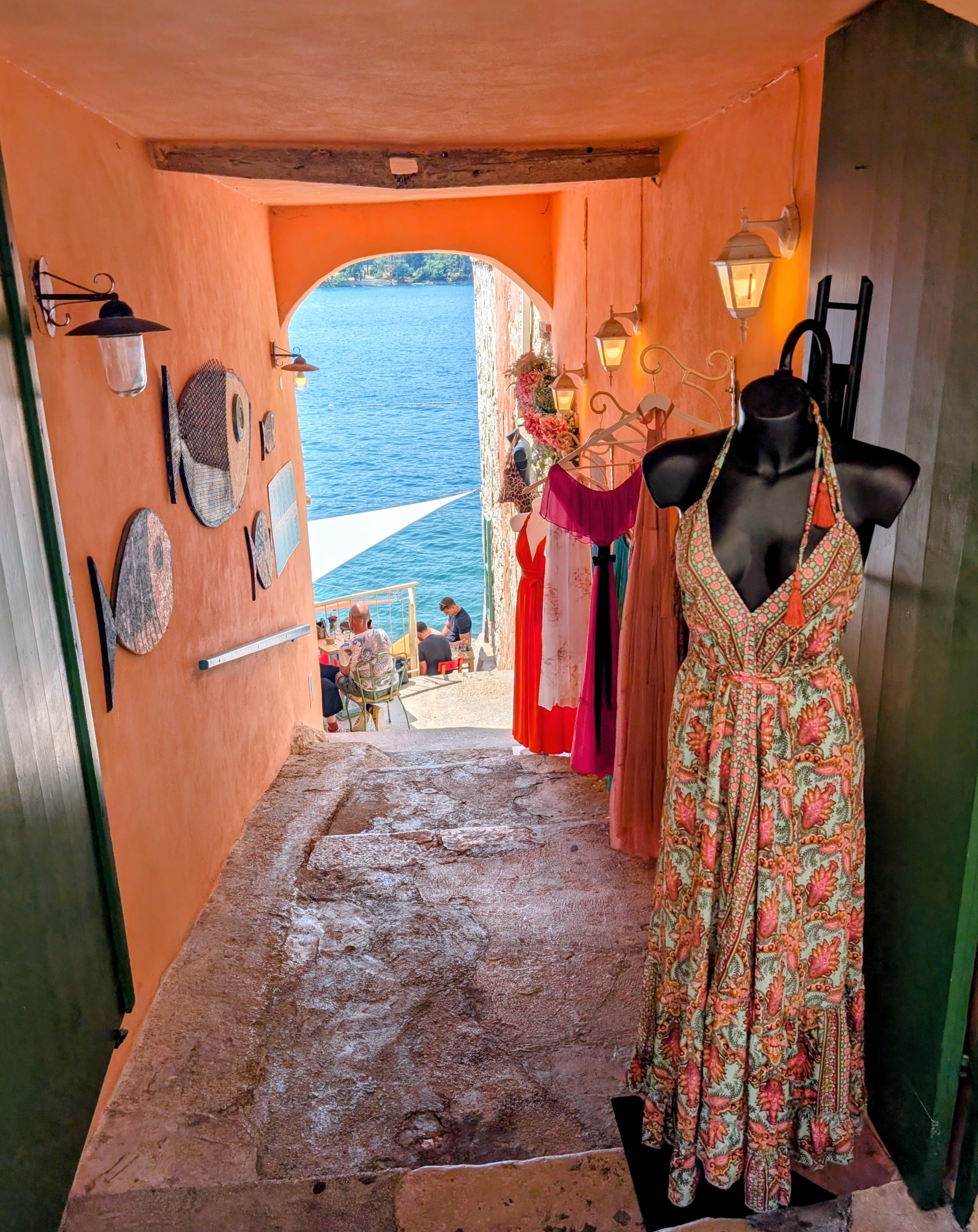
You can still get lost in the old-town streets. They are almost theatrically impressive, and you stop caring whether people actually live there or whether the whole place has become an income-generating tourism enterprise. That is how charming they are. You want to wander them forever. The only thing that stopped us was the summer heat, but even buying cold drinks delivered that special Rovinj atmosphere that could probably not be recreated anywhere else. No wonder it is considered one of the gems of Istria.
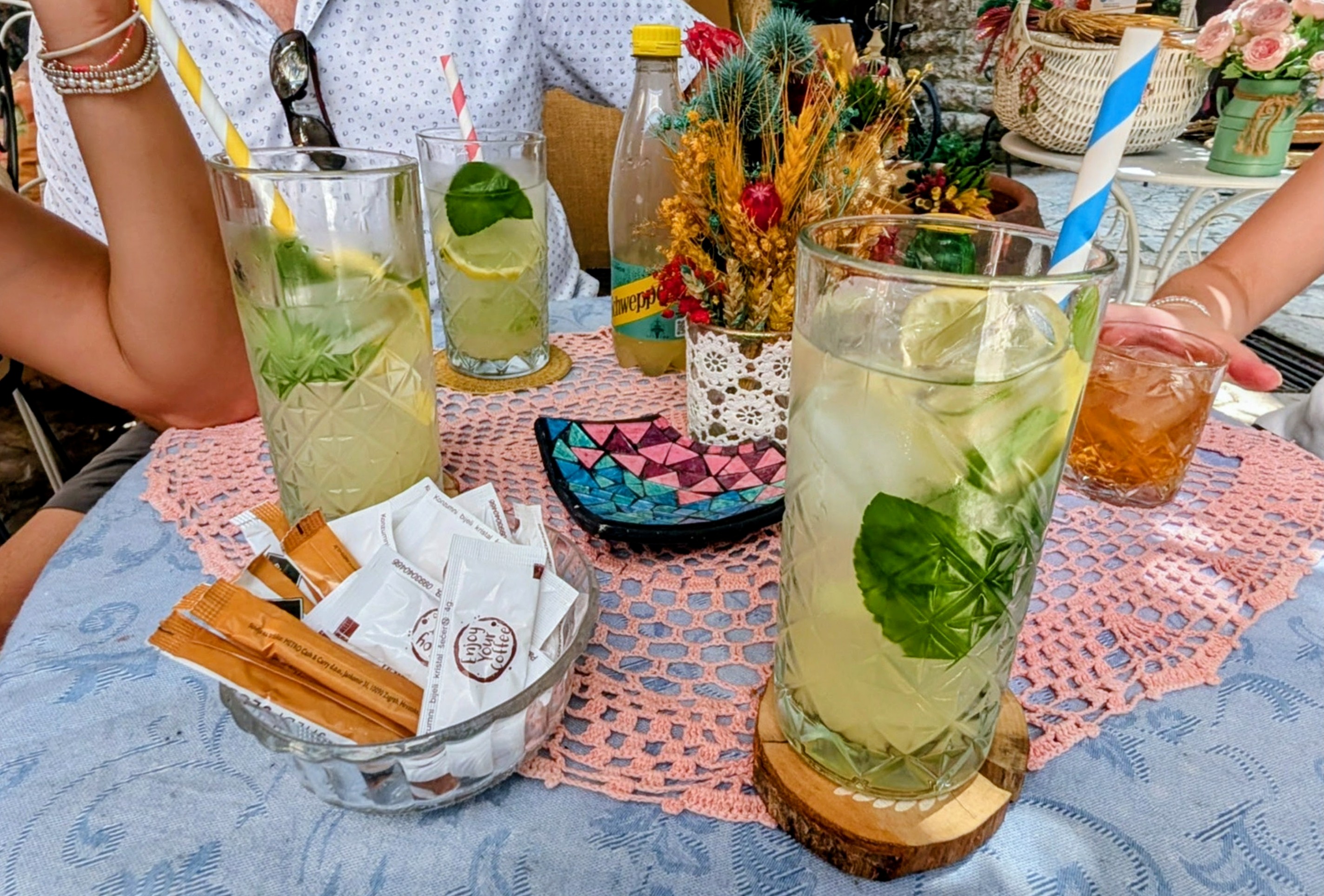
Two or three hours were enough for the old town, and enough for dreams of future returns. If I had to choose which town to come back to, I would still be uncertain. In Lovran I spent a few days; in Rovinj, a few hours. One is sleeping in the nostalgic memory of the better days of its Austro-Hungarian villas. The other proudly announces itself with an almost theatrical presence, towering over its harbor. What do I want more: the quiet garden-to-sea walk along old villas, or tourists performing the ritual of “discovering” another alley in real time on those unapologetically Italian streets?
Honestly, I am craving both. But after seeing Rovinj, I am glad that Lovran remains in the hands of grandmas with no sense of style and has not been conquered by the big hotel corporations. Let them cover the furniture with towels, tend their flowers in unruly gardens, and walk home with their grocery bags, greeting neighbors along the way. This is how the town keeps its soul. I hope I will still find it there when I come back.